We ship worldwide from the USA and UK
PRIME MALE BLOG : GET BACK TO YOUR PRIME
We ship worldwide from the USA and UK
PRIME MALE BLOG : GET BACK TO YOUR PRIME
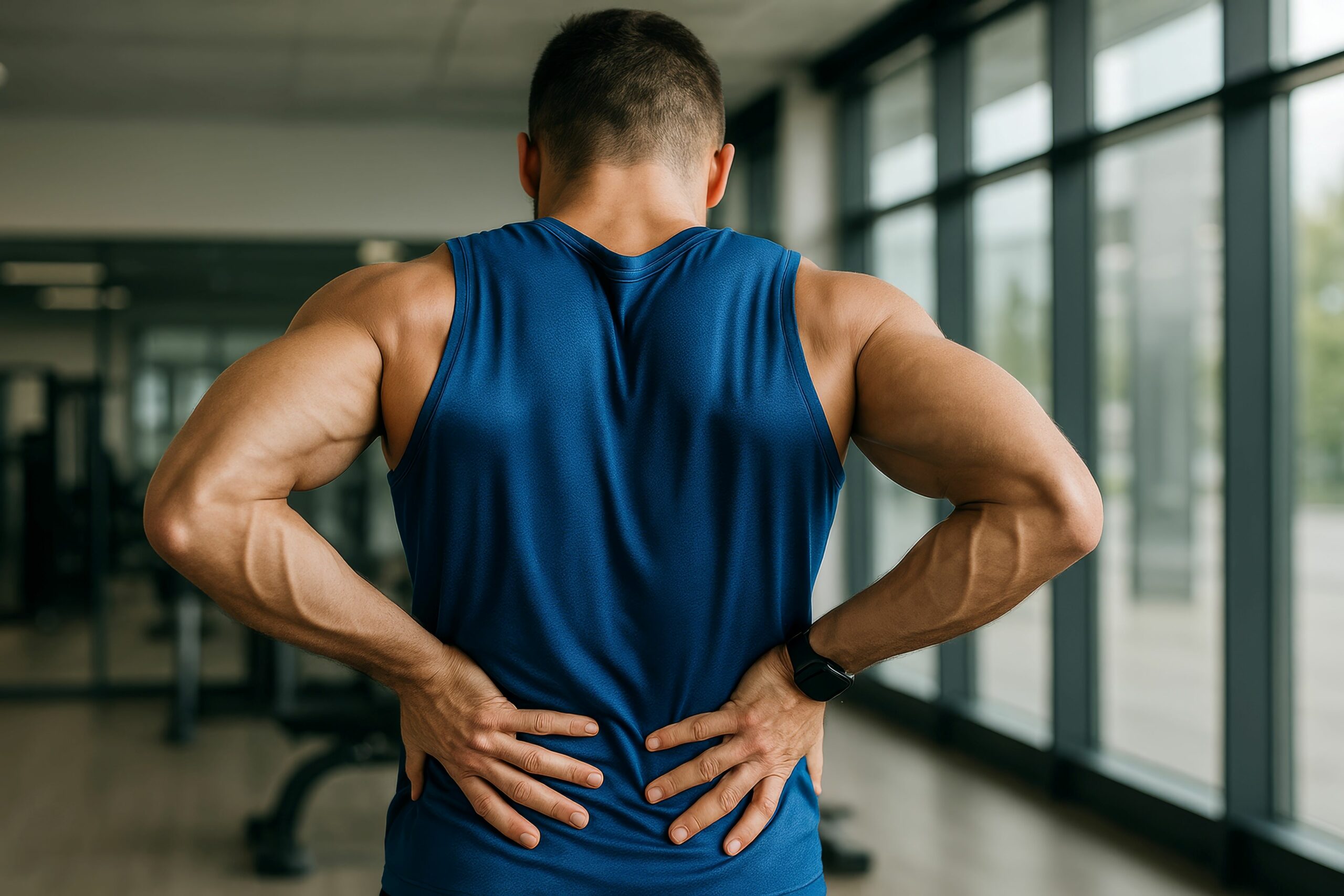
In last week’s article, we talked about calorie burning and why you shouldn’t worry about “burning off” specific food items. This week, I’m answering a question that almost everyone faces when they return to the gym. “What’s the best way to deal with sore muscles after a workout?”
Question: I’ve started going back to the gym recently, and after my first workout my muscles were screaming. What can I do to fix this?
Answer: Delayed Onset Muscle Soreness (DOMS) is an inevitable and frustrating part of returning to training. We all know that regular exercise is good for us, so it can feel unfair when your body refuses to cooperate.
Sadly, there isn’t a secret method to completely avoid DOMS that’s known only to personal trainers. However, after working with a lot of clients over the years, I do know a few ways to reduce how bad it feels.
One of the most important things you can do is clean up your lifestyle for the first few days after you start training again.
That means not going to the pub for six pints, not staying up until 3am playing on your PS5, and not scheduling something incredibly stressful for the day after your first workout. What you want is plenty of sleep, no alcohol, and as little stress as possible. These won’t prevent DOMS, but they can reduce its severity.
For leg soreness specifically, walking can help. Going for a long-ish walk after your first leg workout can reduce how intense DOMS feels. In my experience, this doesn’t work nearly as well for upper body soreness.
That said, if you do this all the time, muscle growth may be slightly reduced. The difference is small, but if your goal is building big legs, it’s usually better to accept the soreness and avoid unnecessary cardio.
Clinically Proven Ingredients to Promote Muscle Mass, Enhance Energy and Libido, and Maximises Overall Performance for Men Over 40.
Order NowActive rest is one of the best ways to manage DOMS, even though it often feels unpleasant at the time. This could include walking, yoga, light bodyweight exercises, or even an easy jog. The goal is to increase circulation so your muscles receive more blood flow and nutrients.
It’s important to remember that active rest is not the same as a normal workout. The intensity should be low, and the duration short, unless you’re walking.
Over-the-counter anti-inflammatories like aspirin or ibuprofen can slightly reduce soreness. Personally, I only use them when DOMS is particularly bad and I need to recover quickly for my weekly football humiliation.
Sports massages are harder to judge. The research doesn’t strongly support their effectiveness, but many professional athletes still use them. That suggests they may help some people, even if the science is unclear.
Epsom salt baths are often recommended for DOMS. I’ve tried them myself and can’t say for sure whether they make a direct difference. However, they’re relaxing and tend to improve sleep, which does help recovery, so they’re still worth trying.
Foam rollers don’t seem to be as effective as people claim, and I’m also unsure about massage guns. Still, if you find they help you personally, there’s no harm in using them.
Finally, hydration matters. Drink plenty of water, as dehydration can worsen DOMS. Caffeine can also help reduce the perception of pain, which is why many people feel better the morning after a tough session.
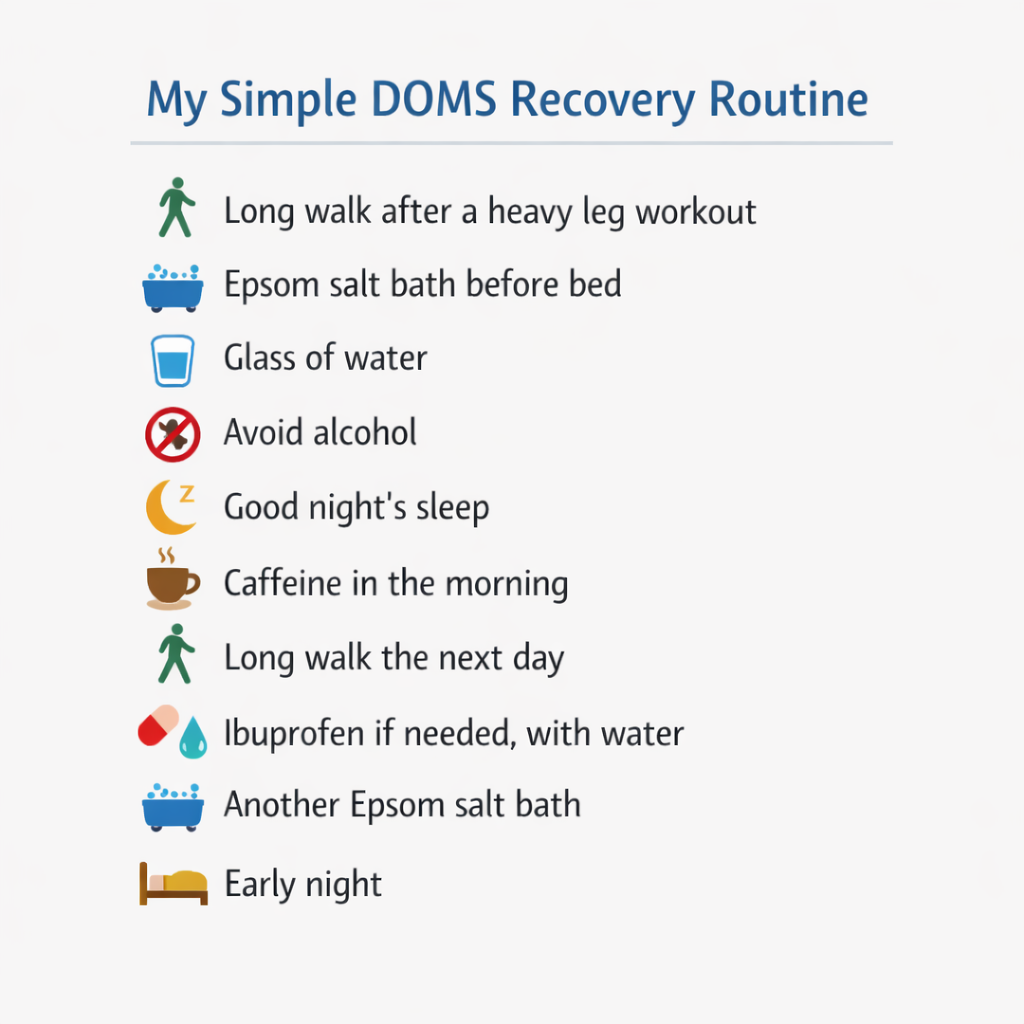
Below is the simple routine I use when soreness is particularly bad.
Tested and Trusted
By Over 1 Million Men
Free From
Heavy Metals
Ingredients
3rd Party Tested

All orders are sent out by a tracked mail service. Your tracking number will be emailed to you within 48 hours of dispatch.




©2026 Roar Ambition Ltd | All Rights Reserved | Whitehall Waterfront, Unit G4, 2 Riverside Way, Leeds LS1 4EH Registered Company number in England and Wales: 08953534