We ship worldwide from the USA and UK
PRIME MALE BLOG : GET BACK TO YOUR PRIME
We ship worldwide from the USA and UK
PRIME MALE BLOG : GET BACK TO YOUR PRIME

We frequently hear how good exercise is at preventing the signs and effects of ageing, and for good reason. Countless studies show that people who stay active in their golden years age far more slowly and gracefully than those who don’t. However, what isn’t often discussed is how different types of exercise compare for ageing men. That brings us to today’s question! Strength training vs cardio: what is better for men over 40?
Table of Contents
This may sound like a cop-out, but there’s only one correct answer when examining strength training vs cardio: what is better for men over 40? That answer is neither. Both types of training are extremely beneficial for everyone, especially men over 40, but neither is comprehensively better than the other. That’s because both benefit an ageing body in very different ways.
Don’t worry if you’re here to figure out which type of training to prioritise, though. I am going to help you choose. I’m just going to do so by breaking the question into smaller parts and demonstrating which type of training better supports ageing men with specific difficulties they’ll face. This includes what is better for supporting the muscles, bones, joints, heart, hormones, and brain.
Let’s get the easy one out of the way. When it comes to building or maintaining muscle, at any age, resistance training and strength training are king. This is primarily because they activate fast-twitch muscle fibres, which are the fibres most prone to age-related loss. Regularly challenging these fibres maintains muscle mass, strength, and power, keeping muscles functional rather than shrinking or weakening.
Regular strength training also lowers chronic inflammation and improves nutrient delivery to muscles. This reduces muscle protein breakdown, slowing the rate of muscle loss, while creating small muscle tears that signal the body to repair and build muscle fibres. It also stimulates muscle protein synthesis, helping replace old or damaged muscle tissue and preventing the gradual muscle loss (sarcopenia) that naturally occurs with age.
Strength training maintains healthier levels of anabolic hormones, including testosterone and growth hormone, while improving insulin sensitivity. This creates a more muscle-friendly environment, making it easier to maintain lean mass than lose it.
Finally, it strengthens neuromuscular efficiency, which is the connection between your brain and muscles. This allows you to recruit more muscle fibres during movement, so the muscles stay “switched on” and efficient [1].
Tested and Trusted
By Over 1 Million Men
Free From
Heavy Metals
Ingredients
3rd Party Tested
Another easy win for strength training is bone density. Between the ages of 30 and 40, bone breakdown begins outpacing bone formation, leading to age-related bone loss. Strength training shifts this balance by slowing bone resorption and encouraging continued bone formation. This also helps reduce the risk of osteopenia and osteoporosis over time.
The improved muscle strength we discussed above also benefits bone density. This is because the muscles can pull more effectively on bones, reinforcing bone strength. At the same time, the improved balance and coordination that stronger muscles provide reduce the likelihood of falls, which are among the biggest causes of fractures in older adults.
When lifting weights or performing resistance exercises, the force and stress placed on bones signal specialised bone cells (osteoblasts) to build new bone tissue. This is called bone remodelling and makes bones denser and stronger, especially at key sites like the hips, spine, and wrists. This also allows targeted improvements. For example, squats and deadlifts load the hips and spine, and presses load the arms and shoulders.
It isn’t just bone density that strength training enhances, either. It also enhances bone quality. Strength training improves bone structure and geometry, making bones better equipped to handle force. This means bones become more resilient, not just heavier [2].
Strength training is also very beneficial for ageing joints. This is primarily due to the benefits it offers the muscles and bones we’ve already seen. Strong muscles act as shock absorbers around joints, providing support for joints like the knees, hips, shoulders, and spine. This relieves excessive joint stress and improves stability during everyday movement. Improved bone density then reduces the risk of joint damage.
Connective tissues like tendons and ligaments also adapt to progressive loading. They become thicker and stronger, improving joint integrity and reducing injury risk, especially as connective tissue naturally loses elasticity with age. Controlled loading during strength training also helps circulate synovial fluid within joints, delivering nutrients to cartilage, which doesn’t have a direct blood supply. This maintains cartilage health and reduces stiffness.
Check out our article on the Best Supplements for Men Over 40
Resistance training also enhances neuromuscular coordination and joint alignment, helping joints move through their proper range of motion. Strength training performed through a full, controlled range of motion helps preserve flexibility and joint mobility, preventing the stiffness that comes with inactivity. Better control also means less shearing or twisting forces that can contribute to joint pain or injury.
Beyond simply reducing joint pain and stiffness over time, regular strength training also reduces symptoms of conditions such as osteoarthritis. This is because stronger surrounding muscles mean joints experience less compressive force during daily activities [3].
Heart health is the first area where cardio is conclusively the superior choice, as cardiovascular training is among the most effective ways to protect and strengthen the heart, which is vital as you age. The best-known benefit of cardio is its ability to increase VO₂ max, which is the body’s ability to use oxygen efficiently. Higher aerobic fitness is strongly associated with lower cardiovascular mortality and better long-term heart health.
Regular cardio strengthens the heart and makes it more efficient at pumping blood. With training, each heartbeat pushes more blood (higher stroke volume), so the heart doesn’t need to work as hard at rest or during everyday activity. It also improves endothelial function, allowing blood vessels to dilate more effectively. Better vessel flexibility improves circulation and reduces arterial stiffness and strain on the heart.
Aerobic exercise then reduces resting heart rate and lowers systolic and diastolic blood pressure. This further decreases strain on the heart and blood vessels, reducing the risk of heart disease and stroke. Consistent cardio also lowers inflammatory markers. As chronic low-grade inflammation contributes to cardiovascular disease, this protects the heart and arteries over time.
Cardio also optimises your blood sugar and cholesterol levels, which is beneficial for the heart. It increases HDL (“good”) cholesterol and lowers LDL (“bad”) cholesterol and triglycerides. This balance slows plaque buildup in arteries and improves vascular health. Regular aerobic exercise then improves insulin sensitivity, regulating blood glucose levels. This reduces the risk of type 2 diabetes, a major risk factor for heart disease [4].
Hormone production is one area that, while strength training does have the edge, is greatly benefited by both cardio and resistance training.
As we age, anabolic hormone production naturally declines. Regular resistance training slows this drop by maintaining lean muscle mass, improving metabolic health, and stimulating hormone-producing pathways, particularly in men over 40.
Resistance training, particularly compound movements like squats, deadlifts, and presses, triggers significant short-term increases in anabolic hormones like testosterone, growth hormone, and IGF-1. These support muscle maintenance, tissue repair, and bone strength. While the spikes are temporary, regular training maintains a more anabolic environment overall.
Strength training with heavy loads, multiple sets, and short rest periods strongly stimulates growth hormone, which aids fat metabolism, tissue repair, and recovery. Strength training also makes tissues more responsive to hormones. For example, it improves insulin sensitivity, allowing nutrients to be shuttled into muscles more efficiently, rather than stored as fat. This improves energy levels, body composition, and metabolic health.
Sufficient strength training even lowers chronically elevated cortisol (stress hormone) levels by improving stress resilience, sleep quality, and circadian rhythms. Lower baseline cortisol helps protect muscle tissue and support a healthier testosterone-to-cortisol balance. Improved sleep quality also boosts the release of many hormones, including testosterone and growth hormone, which are primarily released during deep sleep [5].
Cardio reduces excess body fat, which is hormonally active tissue. Lower fat mass reduces excess conversion of testosterone to oestrogen (aromatisation), supporting a healthier sex hormone balance. Higher-intensity cardio, such as interval training, stimulates growth hormone release, supporting fat metabolism, tissue repair, and recovery.
Regular cardio improves sleep quality and circadian rhythm, supporting the normal release of testosterone, growth hormone, leptin, and melatonin. It also increases insulin sensitivity. This improves a muscle’s ability to absorb glucose, reducing the amount of insulin needed to control blood sugar. Lower, more stable insulin levels improve metabolic health and support healthier testosterone and growth hormone levels.
Moderate cardiovascular exercise significantly lowers even chronically elevated cortisol levels by improving stress resilience and supporting the nervous system. This helps protect muscle tissue, prevent stress-related hormonal disruption, and even support immune function.
Cardio even stimulates the release of endorphins, dopamine, and serotonin, improving mood, motivation, and emotional resilience. This hormonal effect is why regular aerobic exercise is strongly linked to reduced anxiety and depression. This is while converting inactive thyroid hormone (T4) into its active form (T3), supporting better energy levels and a faster metabolic rate [6].
Cognitive performance is another area where both cardio and strength training are beneficial for men over 40, only this time, cardio is slightly more beneficial.
Aerobic exercise improves circulation, delivering more oxygen and nutrients to brain tissue. This supports neuron health and keeps brain cells functioning efficiently, particularly in areas involved in memory and decision-making. It also boosts serotonin, dopamine, and endorphins, improving mood, motivation, and stress resilience. This reduces symptoms of anxiety and depression, which both negatively affect cognitive performance.
All cardio strongly increases brain-derived neurotrophic factor (BDNF), a key growth protein that supports the survival of existing neurons, formation of new neural connections, better neuroplasticity, and the growth of new neurons, especially in the hippocampus, the brain region critical for memory and emotional regulation. This results in better learning, memory, and cognitive flexibility, and slows age-related cognitive decline.
Cardio helps regulate circadian rhythms, improving sleep depth and quality. This is beneficial for the brain as better sleep supports memory consolidation, emotional regulation, and neurotoxin clearance via the glymphatic system. It also lowers inflammatory markers and improves antioxidant defences. As chronic inflammation and oxidative stress damage brain cells over time, this protects the brain from long-term damage.
All the effects listed above then combine to reduce the risk of dementia, Alzheimer’s disease, neurodegenerative diseases, and stroke by improving vascular health, glucose regulation, and brain resilience [7].
Strength training benefits brain health and function in many of the same ways as cardio.
It boosts BDNF production, improving neuron survival and growth, learning, memory, and brain plasticity. It enhances circulation and endothelial function, improving blood flow to the brain, attention, executive function, and long-term cognitive resilience. It lowers inflammatory markers and improves antioxidant capacity, protecting brain cells from oxidative stress, damage, and cognitive decline.
It even improves sleep quality and lowers chronic stress, improving memory, focus, stress resilience, and emotional regulation, and reducing anxiety and depression.
There are also some cognitive benefits it provides more effectively than cardio, or that cardio doesn’t offer at all. For example, studies show that strength training improves working memory, problem-solving, and decision-making, particularly in middle-aged and older adults. Complex lifts also challenge coordination and motor planning, giving the brain added stimulus.
The effect of strength training on hormone levels is also particularly important. It maintains healthy levels of testosterone, growth hormone, and IGF-1, which support neuron repair, synaptic health, and cognitive function. It also improves insulin sensitivity, ensuring the brain receives a steady supply of its primary fuel, glucose. This supports mental clarity and reduces cognitive fatigue [8].
If I were forced to decide whether strength training or cardio is better for men over 40, I would have to pick strength training, as it provides benefits in more areas. In reality, though, both are extremely beneficial for ageing men, and the optimal choice would be devising a routine that includes both.
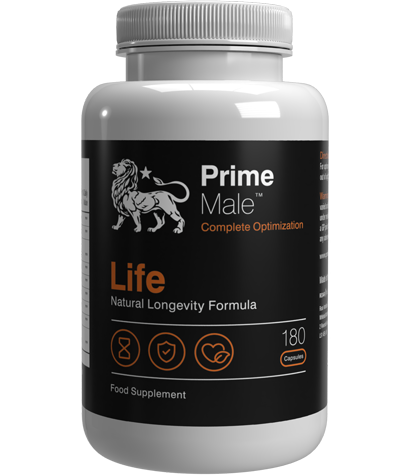
If you are concerned about ageing, I also suggest trying Prime Male Life. A supplement specifically designed to help men age more slowly, it would further reduce the effects and signs of ageing, while supporting many of the benefits attained from exercise and even enabling you to train harder.
Tested and Trusted
By Over 1 Million Men
Free From
Heavy Metals
Ingredients
3rd Party Tested
1] – https://pubmed.ncbi.nlm.nih.gov/33629972/
2] – https://pubmed.ncbi.nlm.nih.gov/35742181/
3] – https://pmc.ncbi.nlm.nih.gov/articles/PMC11676110/
4] – https://pubmed.ncbi.nlm.nih.gov/39381478/
5] – https://pubmed.ncbi.nlm.nih.gov/15831061/
6] – https://pubmed.ncbi.nlm.nih.gov/2984115/
7] – https://pmc.ncbi.nlm.nih.gov/articles/PMC7525918/
8] – https://pubmed.ncbi.nlm.nih.gov/33325273/
Back to Homepage
All orders are sent out by a tracked mail service. Your tracking number will be emailed to you within 48 hours of dispatch.




©2026 Roar Ambition Ltd | All Rights Reserved | Whitehall Waterfront, Unit G4, 2 Riverside Way, Leeds LS1 4EH Registered Company number in England and Wales: 08953534